


Congratulations, new mom-to-be! Discovering you’re pregnant is a monumental moment, filled with a whirlwind of emotions – excitement, joy, and perhaps a touch of anxiety about the journey ahead. The first trimester, typically weeks 1 through 12, is a critical time of rapid development for your baby. It’s also a period where understanding and implementing proper first trimester precautions can make a world of difference for both your health and your baby’s well-being.
At Pahlajani’s Women’s Hospital & IVF Centre, we are dedicated to guiding you through every step of your pregnancy with expert care, empathy, and trusted medical advice. This guide offers essential early pregnancy tips to help you navigate these initial weeks with confidence.
Embracing a Healthy Pregnancy: Your First Steps
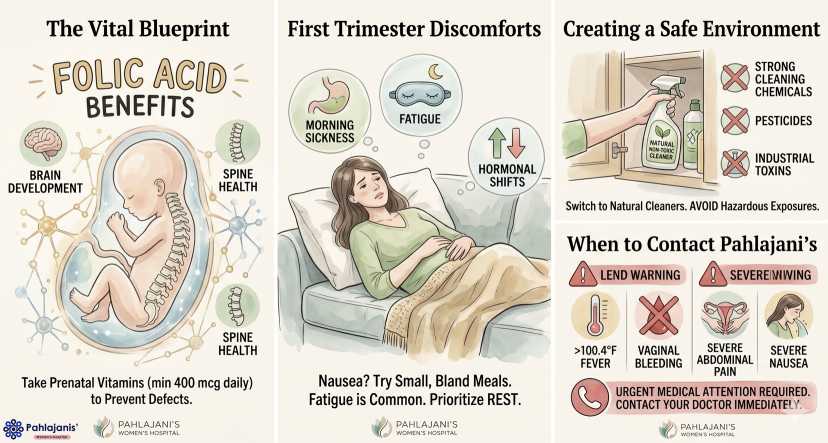
The first trimester often brings unique challenges like morning sickness, fatigue, and hormonal shifts. While these are normal, adopting healthy habits from the outset is paramount. Here’s how you can lay a strong foundation:
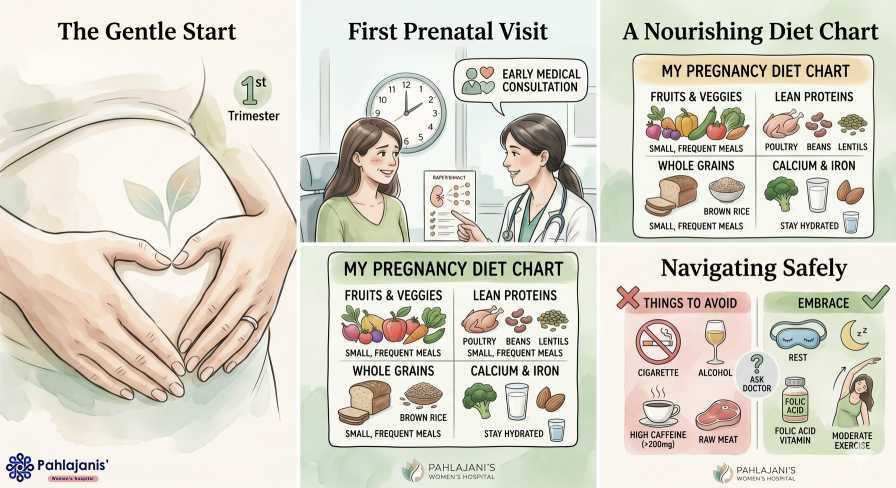
- Early Medical Consultation: Schedule your first prenatal appointment as soon as you suspect you’re pregnant. This allows your doctor to confirm the pregnancy, assess your overall health, provide vital information, and start you on necessary supplements.
- Folic Acid is Your Friend: If you haven’t started already, begin taking a prenatal vitamin with at least 400 micrograms of folic acid daily. This is crucial for preventing neural tube defects in your baby.
- Listen to Your Body: Fatigue is common as your body works tirelessly to create a life support system for your baby. Prioritize rest and don’t hesitate to take naps when needed.
Nourishing You and Your Baby: The Pregnancy Diet Chart
What you eat plays a direct role in your baby’s development. While morning sickness might make eating a challenge, focusing on nutrient-dense foods is key. Think of your pregnancy diet chart as a blueprint for healthy growth:
- Balanced Meals: Aim for a variety of fruits, vegetables, lean proteins, whole grains, and healthy fats. These provide essential vitamins, minerals, and energy.
- Small, Frequent Meals: If morning sickness is severe, try eating smaller meals more often to keep nausea at bay and ensure consistent nutrient intake.
- Hydration is Key: Drink plenty of water throughout the day. This helps with nutrient transport, prevents constipation, and supports increased blood volume.
- Essential Nutrients:
- Iron: Found in lean red meat, poultry, beans, lentils, and fortified cereals, crucial for preventing anemia.
- Calcium: Dairy products, fortified plant milks, and leafy greens support your baby’s bone development.
- Vitamin D: Sunlight exposure and fortified foods are important for calcium absorption.
Things to Avoid in First Trimester for a Healthy Start
Understanding the things to avoid in first trimester is just as important as knowing what to embrace. Certain substances and activities can pose risks to your developing baby:
- Alcohol and Smoking: Absolutely no alcohol or smoking. Both are severely detrimental and can lead to serious birth defects, developmental problems, and miscarriage.
- Certain Foods:
- Raw or Undercooked Meats & Eggs: Risk of bacterial infections like listeria and salmonella.
- Unpasteurized Dairy Products & Juices: Can contain harmful bacteria.
- High-Mercury Fish: Avoid fish like shark, swordfish, king mackerel, and tilefish. Opt for low-mercury options like salmon, canned light tuna, and cod in moderation.
- Unwashed Fruits & Vegetables: Wash all produce thoroughly to avoid toxoplasmosis.
- Processed Meats & Deli Meats: Unless heated to steaming hot, these can carry listeria.
- Excessive Caffeine: Limit caffeine intake to less than 200 mg per day (roughly one 12-ounce cup of coffee).
- Certain Medications: Always consult your doctor before taking any medication, including over-the-counter drugs, supplements, and herbal remedies.
- Hazardous Chemicals & Toxins: Avoid exposure to strong cleaning products, pesticides, and certain industrial chemicals.
- Strenuous Exercise: While moderate exercise is encouraged, avoid high-impact activities, heavy lifting, or exercises that put you at risk of falling. Discuss your exercise routine with your doctor.
- Hot Tubs & Saunas: Avoid activities that raise your core body temperature significantly, as this can be harmful in early pregnancy.
When to Seek Medical Advice
While some discomforts are normal, certain symptoms warrant immediate medical attention. Contact Pahlajani’s Women’s Hospital or your doctor if you experience:
- Severe abdominal pain or cramping
- Vaginal bleeding (more than spotting)
- Sudden gush of fluid from the vagina
- Severe nausea and vomiting that prevents you from keeping food or liquids down
- Fever above 100.4°F (38°C)
- Severe headaches or vision changes
Conclusion: Your Journey with Pahlajani’s
The first trimester is a foundational phase, demanding careful attention to your health and lifestyle. By understanding and following these first trimester precautions, you’re actively contributing to a healthy start for your baby and a smoother pregnancy journey for yourself. Remember, you don’t have to navigate this alone.
At Pahlajani’s Women’s Hospital & IVF Centre, our team of experienced obstetricians, gynecologists, and support staff are here to provide compassionate, evidence-based care tailored to your unique needs. We are your partners in this incredible journey to motherhood, ensuring you feel confident, informed, and cared for every step of the way.
Frequently Asked Questions (FAQ)
Q1: Is spotting normal in the first trimester?
Ans: Light spotting can be normal in early pregnancy due to implantation or cervical changes. However, any bleeding, especially if heavy or accompanied by pain, should always be reported to your doctor immediately for evaluation.
Q2: Can I travel during my first trimester?
Ans: Generally, it is safe to travel during the first trimester, but it’s best to discuss your travel plans with your doctor, especially if you have any underlying health conditions or a high-risk pregnancy. Avoid long hours of sitting and stay hydrated.
Q3: How much weight should I gain in the first trimester?
Ans: Weight gain in the first trimester is typically minimal, often just 1-5 pounds. Some women might even lose a small amount due to morning sickness. The focus should be on healthy eating rather than achieving a specific weight target. Your doctor will monitor your weight gain throughout your pregnancy.
Q4: What if I accidentally ate something from the ‘foods to avoid’ list?
Ans: Don’t panic. If you realize you’ve consumed something on the ‘foods to avoid’ list, assess the situation. If you experience any symptoms like fever, vomiting, or diarrhea, contact your doctor immediately. Otherwise, simply avoid it going forward and ensure you’re eating safely. Most accidental exposures do not lead to issues.
Q5: Is it safe to have sex during the first trimester?
A5: For most healthy pregnancies, it is generally safe to have sex during the first trimester. Your baby is well-protected within the uterus. However, if you have a high-risk pregnancy, a history of miscarriage, or experience any bleeding or pain, your doctor might advise against it. Always follow your doctor’s specific recommendations.